Deck 1

Welcome to Your Home at Sea

Your cabin is more than a place to sleep—it's your private retreat during the voyage. This guide explains the types, locations, and features to help you choose the best fit.

  • Cabin categories range from compact interiors to expansive suites.
  • Location on the ship affects motion, noise, and convenience.
  • Understanding your priorities—budget, view, and space—is key.
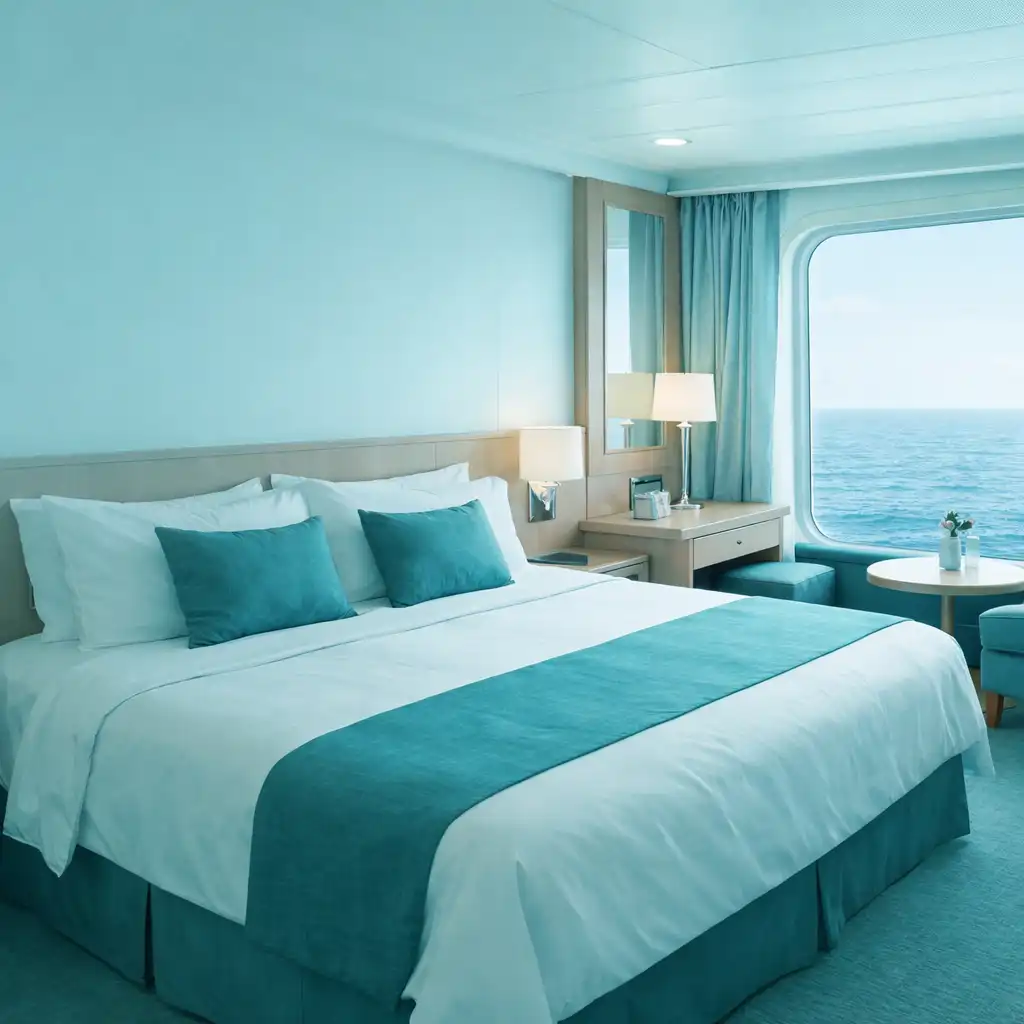
Bright modern cruise ship cabin with a large ocean-view window, neatly made bed, and warm wooden furniture
Cabin Types

Cabin Categories Overview

Four main categories cover most cruise ships. Each has a distinct balance of price, space, natural light, and outdoor access.

Category 1

Interior Cabins

The most affordable option, interior cabins have no window but offer a cosy, quiet space ideal for budget-conscious travellers.

  • Typically 150–200 square feet.
  • Best for those who spend little time in the cabin.
  • Often located on lower decks.
Category 2

Oceanview Cabins

Oceanview cabins feature a window or porthole, providing natural light and a view of the sea without the cost of a balcony.

  • Window may be fixed or openable.
  • Slightly larger than interiors.
  • Good for those who want light but not outdoor space.
Category 3

Balcony Cabins

Balcony cabins offer a private outdoor space, perfect for enjoying sea views and fresh air. They are the most popular choice for many cruisers.

  • Balcony sizes vary but typically hold two chairs and a small table.
  • Higher decks often have better views.
  • Worth the extra cost for scenic itineraries.
Category 4

Suites

Suites provide the most space and luxury, with separate living areas, enhanced amenities, and often exclusive perks like butler service.

  • Can range from junior suites to multi-room penthouses.
  • Perks may include priority boarding, dining, and lounge access.
  • Ideal for special occasions or long voyages.
Deck Tips

Choosing Your Cabin Location

Midship vs Forward vs Aft

Midship cabins experience less motion and are close to central facilities. Forward cabins may feel more movement but offer great views, while aft cabins can be quieter but farther from amenities.

  • Midship is best for those prone to seasickness.
  • Forward cabins near the bow may have obstructed views.
  • Aft cabins often have larger balconies.

Deck Considerations

Higher decks offer better views but may feel more motion. Lower decks are stable but can be near engine noise or public areas.

  • Avoid cabins directly under pool decks or nightclubs.
  • Cabins near lifts are convenient but may have foot traffic noise.
  • Check deck plans before booking.
Suite Perks

Suite Life: Is It Worth the Upgrade?

Suite Amenities

Suites often include priority embarkation, dedicated concierge, upgraded toiletries, and access to exclusive lounges and restaurants.

  • Some suites have separate bedrooms and living areas.
  • Butler service is common on luxury lines.
  • Balconies may be larger with better furniture.
Comfort Check

Cabin Features and Comfort

A few practical details can make a big difference to how comfortable your cabin feels.

Bed Configurations

Most cabins offer twin or queen configurations. Some can accommodate third or fourth guests with pullman beds or sofa beds.

  • Check bed size and mattress quality if you have preferences.
  • Connecting cabins are ideal for families.
  • Some ships offer virtual balconies in interior cabins.

Bathroom and Storage

Bathrooms are compact but functional, often with a shower only. Storage includes wardrobes, drawers, and under-bed space.

  • Suites may have bathtubs and double sinks.
  • Bring magnetic hooks for extra hanging space.
  • Toiletries are usually provided but may be basic.

Technology and Power

Modern ships offer USB ports, flat-screen TVs, and sometimes interactive systems. Australian travellers should bring a universal adapter for power outlets.

  • Outlets are often a mix of US, European, and Australian standards.
  • Wi-Fi is available but usually at an extra cost.
  • Some cabins have mini-fridges and safes.
Family Spaces

Cabins for Families and Groups

Family Cabins

Many ships offer family cabins with extra space, multiple bathrooms, and proximity to kids' clubs. Connecting cabins are a flexible alternative.

  • Family cabins may sleep up to 5 or 6.
  • Some have partitioned sleeping areas for privacy.
  • Book early as they are limited.

Group Booking Tips

For groups, consider booking adjacent cabins on the same deck. Some cruise lines offer group discounts or perks.

  • Request cabins near each other when booking.
  • Check if the ship has cabin blocks for groups.
  • Consider a suite as a gathering space.

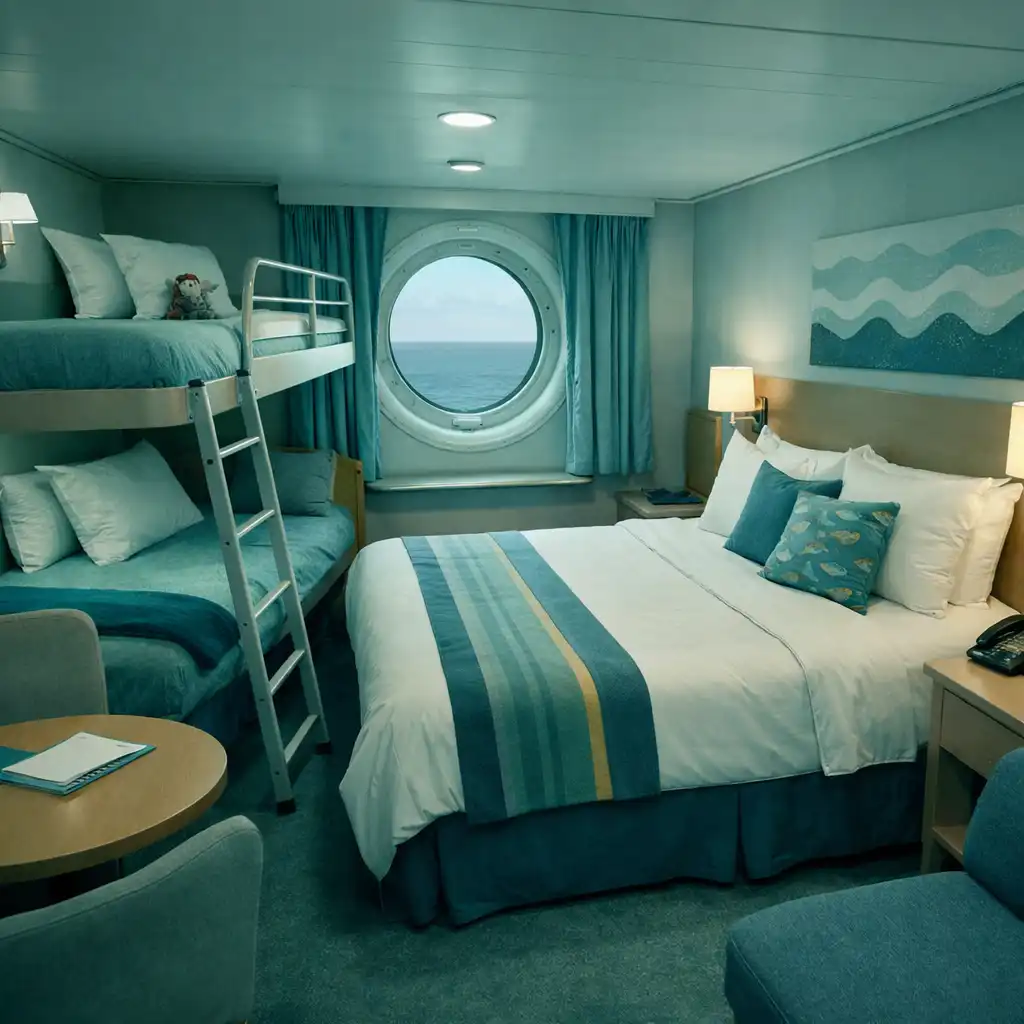
Family-friendly cruise cabin with a double bed, bunk bed, small table, and porthole window
Access for All

Accessible Cabins

Accessibility Features

Accessible cabins offer wider doorways, roll-in showers, grab bars, and lowered fixtures. They are located near lifts for convenience.

  • Must be booked directly or through a specialist agent.
  • Availability is limited; book well in advance.
  • Some ships have pool lifts and accessible public areas.
Aussie Essentials

Cabin Selection Tips for Australian Travellers

A few local considerations can save time, money, and frustration before you sail.

Power and Appliances

Australian devices require a Type I plug, but most ships have US or European outlets. Bring a universal adapter and consider a power board without surge protection.

  • Check voltage compatibility—most ships are 110V/220V.
  • Hairdryers are usually provided; high-wattage appliances may be restricted.
  • USB charging ports are common in newer cabins.

Currency and Onboard Accounts

Onboard expenses are charged in the ship's currency, often USD or EUR. Australian banks may charge foreign transaction fees.

  • Consider a travel card with no foreign transaction fees.
  • Tips are often added automatically; check the cruise line's policy.
  • Some Australian cruise lines operate in AUD.

Departure Ports

Many Australians cruise from Sydney, Brisbane, or Melbourne. Choose a cabin location that minimises travel time to the port.

  • Consider a hotel stay before embarkation if travelling far.
  • Some cruises depart from overseas ports; factor in jet lag.
  • Check parking or transfer options.
Cabin Comparison

Cabin Comparison Table

A quick reference for size, view, balcony access, and typical price positioning.

Comparison of interior, oceanview, balcony, and suite cabin categories
Cabin Type Typical Size View Outdoor Space Price Range
Interior Smallest None None Lowest
Oceanview Small to medium Window or porthole None Mid
Balcony Medium Full window and door Private balcony Higher
Suite Largest Expansive Large balcony or terrace Highest

Price ranges are indicative and vary by cruise line, ship, and itinerary.

Common Questions

Frequently Asked Questions

Next Steps

Ready to Choose?

Review deck plans, consider your budget and priorities, and book early for the best selection. Explore our other guides for more cruise planning help.

Accuracy Note

Cabin features and amenities vary by ship and cruise line. Always verify details with the cruise line or your travel agent before booking. Information is verified to the best of our ability but may change. No responsibility is assumed for discrepancies.